Professional sanitation and food hygiene professionals in Brampton assist restaurants, commissaries, bakeries, warehouses, and mobile food services staying compliant. They decontaminate regularly touched surfaces, food contact areas, equipment, floors, drains, restrooms, and prep zones with approved chemicals, maintaining proper ratios, and documenting contact times. You require regular sanitation based on hazard level, food throughput, food allergies, and inspections, plus documented proof backing HACCP, quality reviews, and regulatory adherence. The sections below explains what strong sanitation programs must contain.
Main Points
- Sanitation specialists in Brampton support restaurants, grocery departments, commissaries, warehouses, bakeries, schools, mobile vendors, and allergen-sensitive operations.
- Sectional methods disinfect frequently contacted areas, food-contact equipment, kitchens, floors, drains, restrooms, and storage areas for preventing cross-contamination.
- Trained providers validate proper chemical concentration, appropriateness, and contact time, then document finishing with samples, assessments, and corrective-action records.
- Effective sanitation calendars factor in threat, production volume, switches, accidents, and requirements when distributing routine, weekly, and cyclical operations by area.
- Liability, color-coded equipment, HACCP, sanitation understanding, safety training preparation, testimonials, and compliance-ready hygiene documentation are vital supplier traits.
What Brampton Venues Require Food Safety Cleaning?
Brampton operations that deal with, maintain, prepare, package, or provide food require food sanitation. Implement it if your facility is subject to health reviews, food regulations, or HACCP protocols. The requirement covers eateries, dining facilities, warehouses, supermarket areas, meat counters, fish departments, retail outlets, and institutional kitchens.
Compliant food safety cleaning is equally necessary in storage warehouses, production plants, freezer facilities, bakeries, school nutrition services, reception halls, and meal delivery centers. Temporary and mobile businesses are included, including mobile kitchens, market vendors, and seasonal booths. Your facility needs written cleaning standards when your staff handle raw materials, divide prepared foods, warm meals, or maintain allergen storage. In Brampton, sanitation stays optional; it forms regulatory, business, and safety requirements.
What Do Brampton Cleaning Experts Clean?
You require experienced cleaning professionals who sanitize frequently touched areas, kitchen spaces, floor areas, and bathrooms to ensure compliance with food safety and health standards. These areas are targeted because they carry the greatest contamination risk, slip and fall dangers, and regulatory breaches.
Understanding their cleaning procedures allows you to confirm your facility's cleaning meets required standards and regulations.
Key High-Touch Surface Disinfection
establish a cleaning protocol
swab testing to confirm cleaning efficacy
Cooking Zones, Walking Surfaces, and Restroom Environments
Professional cleaners in Brampton prioritize kitchens, floors, and restrooms given that each location involves specific contamination control, falling hazards, and public health requirements. In industrial kitchens, you need degreasing on cook lines, equipment exteriors, drains, prep surfaces, and splash zones to minimize contamination and pest pressure.
Floor care that is documented should also be anticipated. Technicians clean and remove buildup from tile grout, ceramic surfaces, and vinyl floors, then apply appropriate drying controls so you can reduce slip incidents and maintain code-compliant conditions. They also handle entryways where moisture and debris migrate indoors.
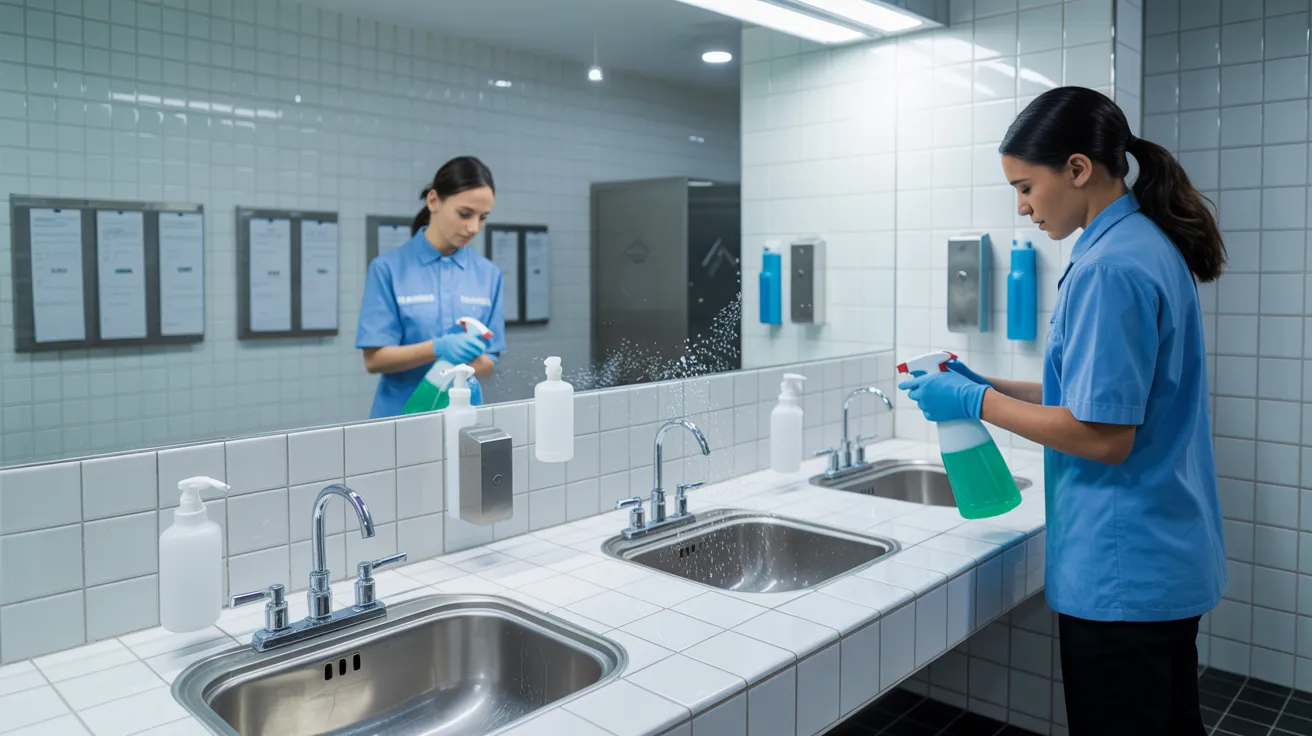
Restroom cleaning requires decontaminating touch areas, bathroom equipment, stall barriers, supply stations, and bins, restocking supplies and controlling odours. They also service restaurant moprooms, where chemical storage, sink hygiene, and drainage conditions can affect sanitation compliance and staff safety daily.
Why Food Safety Cleaning Matters in Brampton
Brampton facilities require proper hygiene standards to fulfill compliance obligations and pass audits. You also reduce cross-contamination by cleaning and sanitizing food-contact surfaces, equipment, and high-touch areas correctly. Most importantly, you safeguard community wellness by reducing the chance of food poisoning in your establishment.
Food Safety Regulations
Because Brampton food operations operate under strict public health standards, food safety cleaning directly determines your capability to fulfill health code requirements, ensure the safety of customers, and eliminate enforcement action. You must maintain sanitized food contact points, written maintenance records, safe chemical management, and verifiable staff procedures that correspond to municipal and provincial inspection expectations.
Retaining strong cleaning records proves due diligence for inspection audits and demonstrates that your practices are uniform, reproducible, and tracked.
Cross-Contamination Prevention
Maintaining regulatory compliance copyrights on your capacity to prevent cross-contamination during everyday food preparation and sanitation. You must separate raw ingredients from ready-to-eat foods, sanitize prep surfaces between tasks, and store chemicals visit resource away from food-contact items. Explicit protocols lower contamination threats and support consistent compliance during inspections.
You could implement allergen segregation to stop main allergens from reaching common areas, containers, or machinery. Use dedicated cutting boards, color-coded tools, and rigorous tool identification so staff don't mix items during preparation or service. Mandate handwashing after handling raw meat, seafood, eggs, or allergen-containing products. Swap cleaning rags frequently, and check sanitizer strength with test strips. When you train staff to follow these controls each shift, you create a cleaner, safer operation that meets Brampton's food safety expectations every day.
Public Health Defense
When food safety cleaning fails, you don't just risk a failed inspection—you increase the chance of food-related sickness impacting customers, staff, and the wider Brampton community. You also weaken your role in safeguarding community wellness, especially in busy food facilities where contamination can spread quickly through surfaces, equipment, and touchpoints.
You need sanitation procedures that remove soils, disinfect properly, and confirm effectiveness. That requires adhering to contact times, employing authorized sanitizers, documenting schedules, and educating employees to meet health-unit expectations. These controls support pathogen reduction by reducing pathogens before they contaminate surfaces or food. In Brampton, rigorous cleaning protects vulnerable populations, limits outbreak potential, and enables you to show due diligence. When you clean to standard, you exceed basic requirements—you substantially decrease danger and promote secure food handling throughout the region.
Why Is Cleaning Essential for Food Safety Compliance?
Strict sanitation practices ensure food safety compliance by decreasing contamination threats, controlling pathogen growth, and ensuring your facility complies with sanitation requirements under HACCP-based programs and public health regulations. You verify that product-contact areas appear visibly clean and microbiologically controlled, facilitating documented preventive controls and inspection readiness.
Conscientious cleaning further strengthens allergen control by eliminating residues that can provoke undeclared allergen exposure. When you pair validated sanitation procedures with standards training, your staff can execute standardized methods, handle approved chemicals correctly, complete records correctly, and respond to discrepancies in advance of they escalate. Systematic cleaning enables supply chain documentation, confirms remedial measures, and exhibits accountability in audits. Additionally, it assists you preserve product safety, sustain regulatory compliance, and lower the possibility of enforcement actions, product recalls, formal complaints, and preventable health hazards.
When Do You Schedule Commercial Cleaning?
Cleaning plans work best when you set them according to risk, production volume, and regulatory requirements rather than depending on a fixed calendar alone.
Seasonal comprehensive cleaning should be scheduled during shutdowns, weather-related soil buildup, or pest-pressure periods
What Should You Look For in Brampton Cleaning Experts?
Begin by evaluating providers based on sanitation compliance standards—not solely on price alone. You should confirm that each organization comprehends CFIA, public health, and HACCP-based requirements applicable to your facility. Request proof of insurance, WHMIS compliance, staff training documentation, and oversight procedures. Assess whether technicians recognize cross-contamination hazards, chemical handling protocols, and verifiable sanitation records.
Additionally, you need to evaluate operational reliability and responsibility. Obtain references from food facilities in Brampton, then review response times, corrective measures, and communication standards. Verify the company conducts supplier reviews and can deliver inspection-ready documentation when inspectors or external parties need proof. Verify equipment is maintained, color-coded equipment are applied correctly, and site-specific hazards are identified. A qualified provider ensures compliance, product quality, and your brand reputation.
What details should a Food Safety Cleaning Plan include?
Develop a written plan that makes clear every sanitation task, standard, and responsibility prior to production start. You should detail cleaning schedules, authorized chemicals, concentration levels, contact duration, implements, and validation techniques for each location, surface, and apparatus. Include pre-operational inspections, corrective actions, and employee training requirements.
Your framework should also include cross-contamination controls, waste handling, pest-prevention measures, and documented schedules for restrooms, drains, floors, and food-contact areas. Clarify how you'll distinguish raw from ready-to-eat operations, help with ingredient tracking, and maintain accurate allergen labeling through validated cleaning between product changes. You should define accountability, preserve signed records, and review results against regulatory standards, HACCP controls, and customer requirements. When gaps appear, revise procedures immediately and retrain staff.
Regular Posed Questions
Are cleaning services available for overnight shifts in Brampton properties?
If you operate regulated spaces, you'll also need documentation that enable audits and ensure quality assurance.
Are emergency spill response services provided from sanitation professionals?
Yes, you can expect Brampton cleaning experts who provide hazard containment solutions. They manage hazardous materials, assess risks, isolate affected areas, and start rapid decontamination to reduce exposure and avoid operational disruption. You should confirm response times, training certifications, PPE protocols, and waste management. If your facility must meet regulatory requirements, choose a provider that documents incidents, maintains regulatory procedures, and supports audit readiness.
Do green disinfectants perform safely on food preparation areas?
Absolutely, plant-based sanitizers are secure for food preparation areas when you opt for products labeled food safe and meeting regulatory standards. You must verify contact duration, concentration levels, and rinse protocols ahead of deployment. Plant-derived products reduce toxic chemical contact, though you require proof of efficacy against specific pathogens. For preserving residue-free areas, follow precise manufacturer instructions and ensure the sanitizer satisfies food industry regulations.
Can sanitation programs be adjusted for seasonal production changes?
Without question, cleaning schedules adjust easily for seasonal shifts. Adapt timing, labor allocation, chemicals, and validation steps to fit production rhythms while sustaining regulatory compliance. Lower equipment downtime by planning cleaning surrounding line changes, peak seasons, and usage cycles. Additionally update procedural documents, staff education, and environmental testing to account for periodic risks, emerging allergens, or increased soiling. Ongoing evaluations keep your plan current.
Do commercial cleaning providers instruct your team in sanitation best practices?
Absolutely, commercial cleaners regularly deliver employee education on sanitation best practices. Your staff receives instruction on correct chemical handling, dwell times, contamination avoidance, machine takedown, and documentation. They typically align instruction with HACCP, GMP, and CFIA or regional health authority requirements. Many conduct sanitation audits to ensure adherence, pinpoint weaknesses, and strengthen corrective measures. This helps you maintain consistent procedures, clear audits, and reduce food safety risks consistently.
Conclusion
Partnering with Brampton commercial cleaning and food safety professionals means more than cleaning—it guarantees your operation stays inspection-compliant and your standards are defensible. From processing facilities to kitchens, each sanitized surface and maintained corner lessens contamination risk and prevents major expenses. By scheduling maintenance at suitable frequencies and executing a comprehensive cleaning strategy, you shield your workforce, your customers, and your image. In a tightly controlled market, sanitary conditions can't be overlooked—they're critical to business success.